Showing posts with label book review. Show all posts

Wednesday, April 18, 2012

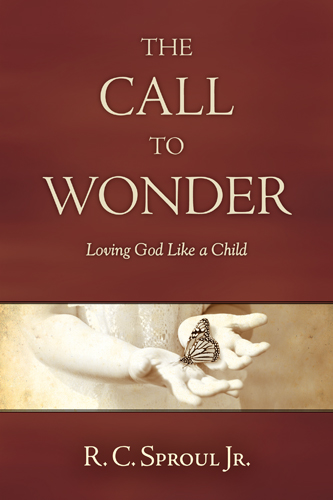
Book Review: The Call To Wonder by R.C. Sprul Jr.


As part of the Tyndale Bloggers Network I will occasionally review books provided to me by the publisher.  

My father-in-law passed away recently.  While in Michigan for his funeral, I brought the new book by R.C. Sroul Jr., The Call To Wonder.  When my sister-in-law saw the book on the end table, she mentioned that Sproul’s wife had just passed away and that she had been reading his blog posts (you can find his blog here).  This brought perspective to my reading.  As an author he wrote about loving God like a child.  Now as a widower that childlike relationship with God is severely tested.  As he wrote the book, he was comforting his wife in her struggle through cancer treatment.  As I read the book, he was grieving the loss of his wife to that cancer.  Stethoscope to his chest, I can hear his heart through these words bound in this small book. 

The book focuses on children as a model.  Sproul considers their trust, their wonder, and their desire to please as parallels between the innocence of children and our approach to God.  He does so by using examples from his own children.  These are wonderful parables, stories of children that are personal, intimate, and real. At times these are tender stories.  His chapter on his special needs daughter, Shannon, aka Princess Happy, is particularly touching (chapter 6, “the Call To Joy). Her fascination with balloons and her “love affair with sunbeams” (p. 144) are examples of how “Shannon lives in a constant state of wonder because she receives the grace and beauty of God for what they are and sees them wherever they are – which is everywhere” (p.143).  This tenderness gives way to conviction.  His suggestion that his children are his spiritual betters (p.23) may mistake the model for the reality, but the model is an effective mirror.  I can see the deficiencies of my faith in the ways of children. 

So Sproul calls me to treat God as “completely and utterly trustworthy” (p.46); to take in the universe “as a child takes in a fireworks show” (p.61); to resist the temptation to tame the God of surprises (p.4); and to ardently desire to please God as a child longs to please his father (p.86). These are hard principles, even in the placid seas of familiar routine - how much more in his wild torrent of spousal death.   And yet, if his blog posts are any indication, he is seeking to practice what he preaches.

But as a book critic, I cannot not merely listen to his heart.  At some point I must set aside the stethoscope and pick up the scalpel. The book is built on Mathew 18:3, where Jesus says, “Unless you change and become as little children, you will never enter the kingdom of heaven” (NIV).  When Jesus tells us that we must become like children, he is using a simile, a form of comparison using the words “like” or “as.”  The simile has meaning in as much as we understand the connection between the two things being compared. 

If I use snow as the object of a simile, that may be because snow is white, or cold, or impermanent. I may be referring to any of those attributes - it is unlikely I am referring to all of them.  The simile cannot mean whatever we please.  Context will help determine which of these referents I have in mind. 
When Jesus calls us to be like children it is within a discussion of who is the greatest in the kingdom of heaven.  In verse 4 he clarifies his intent.  “Therefore, whoever humbles himself like this child is greatest in the kingdom of heaven.”  The key to greatness is humility.  A child is a picture of that.  We should show the same dependence.  Nothing in my hand I bring.  Simply to the cross I cling. The chapter on “The Call To Trust” has its finger on this.  Other chapters, like the Call to Wonder, the Call to Please, The Call To Joy are interesting, but not outgrowths of Jesus’ call to be like a child.  None of these are hinted at by the simile. 

This isn’t heretical, but it does seem sloppy, particularly as he uses his tendency toward deep theological reflection as a contrast to his children’s model of faith.  Like writing a note about how wonderful my handwriting is, in a scribble that is barely legible, there is deep irony in ribbing himself for being ”quite the theologically sound fellow” (p.136) and then carelessly interpreting his key text.  

Still, this is a worthwhile read.  Even if the lessons learned can’t be hung on the passage he relies on, they remain valuable lessons. Some are lessons I need.

Most helpful for me was his suggestion that we feel loss most profoundly when it is in contrast to previous blessing (pages 169-172).   I miss my father-in-law because he was such a blessing to have had in my life.  So rather than be embittered by the loss, I should be grateful for the blessing.  To get bogged down in “why, God?” is to miss out on “Thank you, Lord” ( I comment more on this lesson in my previous post "Entitlement").

To get hung up on one deficiency would be to miss this and other valuable lessons offered in this book.  There is a place for a scalpel in your reading.  But in this case, make sure to rely most heavily on the stethoscope.

If you've enjoyed this post, consider subscribing by e-mail.  If you think others would benefit, share it with them.

Wednesday, January 4, 2012

Happily Ever After


As part of the Tyndale Bloggers Network I will occasionally review books provided to me by the publisher.    I hope my reviews will be a window into my life and not just a rehashing of the book.

"Why can't marriage always be like that?"  We had just finished watching Pride and Prejudice with Kiera Knightley on New Years Day and were preparing for bed.  My wife was deeply moved by the noble and passionate love of Mr. Darcy that is revealed in the end.  I was mildly suspicious that this was a set up to expose my lack of romanticism.  "Because it's unsustainable," I stated, a bit too matter-of-factly.  This launched a conversation that spanned two nights in which we explored my wife's longing for and my own dismissal of this expression of love.  It was a circuitous route, this conversation, but it arrived at a satisfying end.  I discovered that I fear romanticism because I feel inept in expressing it.  Sue realized that this longing is planted in her soul as something too big for marriage to fill - a longing only God can satisfy.

And this is our marriage - two people who love each other deeply but have much to learn about themselves and each other.  Sometimes we stumble over each other's feet, and sometimes into each other's arms. Either way, this is a shared journey.  In this case, the vulnerable and risky dialogue that paved the way for mutual insight was more than just dialougue - it was intimacy.  One more log on the fire of love.  A fire that sometimes blazes and other times smolders.

I have a marriage that most people would envy.  It's not perfect, but it is durable.  Sixteen years of marriage have weathered this relationship.  Through the years our love has been pressed and twisted until well worn. It survived crisis that brought the relationship to the brink and led to a period of brief separation about five years ago.  We have fought hard to preserve this union.  We have the scars to prove it.  But the tattered complexion of our love has resulted in a bond that only shared struggle can account for.  There is security in a relationship that has been tested and tried.

I just finished reading Happily Ever After: Six Secrets to a Successful Marriage by Gary Chapman.  I was sent a free review copy as part of the Tyndale Bloggers Network.   The book is a fairly typical example of the marriage enrichment genre, one of the best I have read.  It is organized around six major areas of focus: solving conflicts, negotiating change, handling money, raising children, sex, and in-laws.  Each section is then broken down into seven or eight chapters dealing with one component of that topic.  The chapters are short and straightforward.  There are nuggets of insight that are worthwhile.  Examples abound from Chapman's vast experience as a marriage counselor, putting flesh on otherwise theoretical abstracts.  Each chapters closes with steps to put into practice what has been covered in the chapter.  It's a very good book for what it does.

But this is where my history may cloud my review.  I react against the glut of marriage books that focus on techniques.  With all the emphasis on techniques, marriage is reduced to a skill set, akin to playing chess.  Learn the rules, get some strategy, and you can win.   But the hard scrabble of life is more dynamic than a chess game.  To make techniques the focal point of the relationship, "the secrets to a successful marriage," is to cheapen the relationship.

Techniques are tools.  Tools can be useful.  But having the tools doesn't hinder these issues from continuing to infiltrate my marriage.  Most of these principles were not new to me. Many of them fall under the heading of common sense.  When discussing finances, Chapman instructs the reader to live within their means.  In handling conflict he focuses on the importance of listening.  This is not novel advice.  But even familiar, common sense principles still trip me up.  Knowing does not always equate to practicing.  What saved my marriage and carried us through was not a battery of techniques.  If our fundamental need was for techniques, then Scripture would read more like a marriage enrichment book.  Instead, it focuses elsewhere. 

So maybe there's just one secret to a successful marriage, though this is no more secret than the six Chapman covers.  But indulge me for a moment.  Grant me the leeway to unveil it with flourish, as if something new and novel.  Gather round as I pull back the curtain on this profound insight.  The secret (wink, wink) to a successful marriage is the ardent conviction that marriage is a sacred covenant.  It is a holy relationship intended as a model and metaphor of another holy relationship - one even more intimate and hard won.  It is a promise before God to be faithful to another.  A promise not lightly entered, and not lightly broken.  As such, it is worth fighting for.  This is what held us together.  Even when the relationship itself was quite ugly, we fought to restore it.  It was a sacred ugliness that we would not give up on until all options has been exhausted.  God honored our perseverance.  Techniques were useful in fleshing that out, but always secondary to that bedrock resolve. 

Marriage suffers when we downgrade it's holiness.  Our rush to techniques feels to me like we are slipping toward this downgrade.  Techniques are secondary.  A devotion to covenant faithfulness is primary.  Keep this in focus and Chapman's book can help fill your tool box.   Keep this in focus and you will have a successful marriage.  Keep this in focus and even "successful"  will seem like a cheap word to attach to marriage. Better, marriage will be holy and blessed;  a sacred ugliness transformed into sacred beauty.